RPZ Valve
Sand slurry can wear down pump components, elbows, valves, and pipelines as hard particles scrape and strike their surfaces. The damage may appear as thinning walls, rough edges, or a falling flow rate. Small changes matter. In 2026, operators still need practical ways to extend service life without overlooking operating conditions.
This introduction explores why use tungsten carbide coating for sand-slurry applications, focusing on its resistance to abrasive wear and its role in protecting vulnerable surfaces. Tungsten carbide coatings can help reduce material loss where sand repeatedly contacts metal. Their performance, however, depends on more than the coating itself. Particle size, slurry speed, impact angle, coating thickness, substrate preparation, and application quality all influence results. A coating selected from a datasheet alone may disappoint.
The following outline considers where this coating can be useful, how it compares with other wear protections, and what to check before specifying it. It also addresses limitations, including impact damage and compatibility with the equipment’s operating environment. No coating lasts forever. Actual service life should be assessed through inspection and operating data, not promises. That point is easy to miss when a wear problem needs a fast fix.
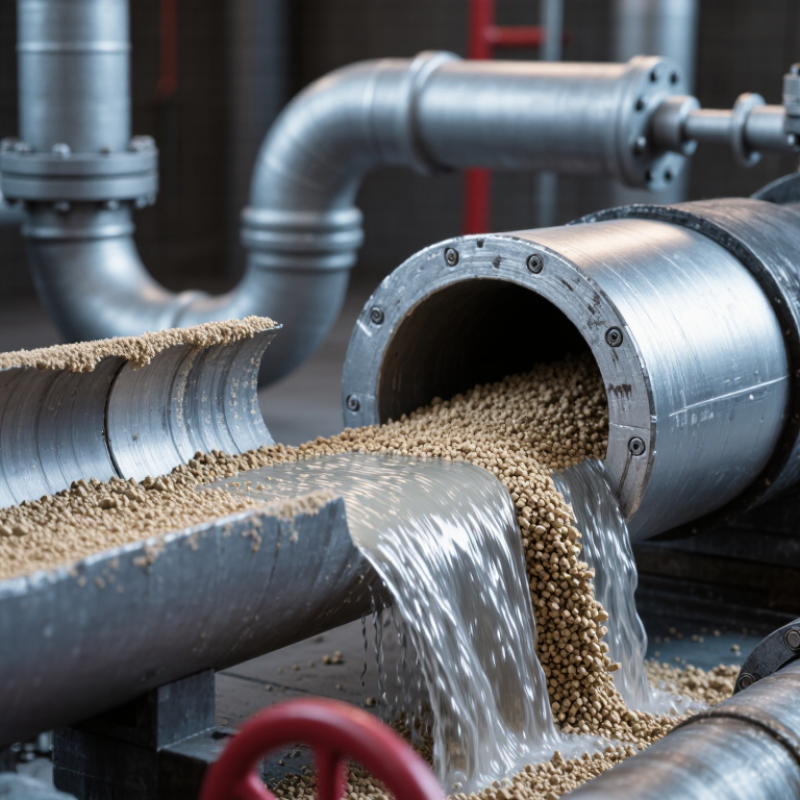
Sand slurry is a mixture of water and abrasive particles, often moving through pipes, pumps, elbows, and valves. Its appearance can be deceptive. Fine grains may travel with the flow, while heavier particles settle during slowdowns and scrape surfaces as movement resumes. Particle size, concentration, flow speed, and changes in direction all influence wear. Even a small bend can become a high-impact zone.
This wear is not always steady. Some areas thin gradually; others develop grooves, pits, or local coating loss. Tungsten carbide coatings can help resist abrasion because their hard particles protect the underlying component. They are not a universal fix. Bond strength, coating thickness, surface preparation, and operating conditions affect service life. A coating that performs well in one slurry system may not suit another. That is worth checking, rather than assuming hardness alone solves the problem.
Tips: Record slurry concentration and particle size, then inspect the same high-wear locations at regular intervals. Look closely at elbows and pump passages. Compare wear patterns over time, and review coating condition before damage reaches the base metal. Small measurements can reveal a changing problem. Do not rely on appearance alone.
In sand-slurry service, protection depends on resisting repeated impacts from hard, moving particles. Tungsten carbide coatings can provide a hard wear surface on pump impellers, elbows, and valve trim. The ASM Handbook, Volume 5A: Thermal Spray Technology, reports that many HVOF-sprayed WC-Co coatings reach roughly 1,000–1,400 HV0.3, depending on composition and test conditions. That hardness helps limit cutting and surface loss as angular grains strike the component. It does not make the equipment invulnerable. Poor surface preparation, coating defects, or impact-heavy flow can still cause cracking or separation. The coating choice should reflect actual slurry concentration, particle size, velocity, and corrosion conditions—not hardness alone.
Tips: Compare candidate surfaces using ASTM G65 abrasion testing, but treat results as a screening tool: its dry-sand test does not reproduce wet slurry. Record coating thickness and inspect edges, where damage can start. Small details matter.
One practical concern is often overlooked: a harder coating may wear well yet be difficult to repair consistently in the field. Check the substrate and application process, then inspect the coating after installation. ASTM G65 results can guide comparisons, but service trials or inspection data are still needed to confirm performance in a specific slurry system.
Sand slurry wears pump parts through repeated contact with hard, angular grains. Tungsten carbide coatings can help protect impellers, sleeves, and valve surfaces in these conditions. Their hard carbide particles resist cutting and micro-abrasion, while the coating bonds to a prepared metal substrate. The result can be slower surface loss and more predictable clearances. That matters when a small change in impeller geometry affects flow or efficiency.
Less frequent replacement can reduce maintenance interruptions. Not magic. Coating performance depends on application quality, thickness, substrate preparation, and operating conditions. A poorly bonded layer may crack or detach, especially where slurry impact is severe. Particle size, concentration, velocity, and slurry chemistry also shape wear; hardness alone cannot predict service life. For a real selection, compare coating data with the component’s failure pattern and inspect worn parts, not just catalog claims. There is a trade-off, too: added coating thickness may affect fit, and repairs need controlled procedures. A sensible trial on a high-wear surface can reveal whether the protection suits the actual slurry, rather than an ideal test.
Typical hardness ranges show why tungsten carbide coatings are considered for abrasive slurry service.
Approximate typical hardness ranges in HV0.3: WC-CoCr coatings can offer a much harder surface than 316L stainless steel, helping resist particle-driven wear. Actual values vary with coating composition, application process, and test method; hardness alone does not predict service life.
Why Use Tungsten Carbide Coating for Sand Slurry in 2026? Common Applications and Component Selection
Sand slurry moves sharp grains through pumps, pipes, and valves, steadily wearing exposed surfaces. Tungsten carbide coatings can resist this abrasion, making them useful on pump impellers, casings, shaft sleeves, elbows, and valve trim. The U.S. Geological Survey’s Mineral Commodity Summaries 2025 estimated U.S. industrial sand and gravel output at about 120 million tons in 2024. That scale highlights the amount of material equipment may handle, though site conditions vary widely. Coating choice should reflect particle size, slurry velocity, impact, and corrosion—not hardness alone. A very hard surface can still fail if the substrate, bond, or coating thickness is poorly matched.
For pump components, prioritize edges and flow zones where grains repeatedly strike or slide. Pipe elbows often need protection at the outer bend; sleeves need a smooth finish to limit seal wear. Valve parts face a different trade-off: abrasion resistance matters, but tight clearances must remain functional. Ask suppliers for coating thickness, porosity, bond-strength test methods, and service-condition references. These details are more useful than a generic “wear resistant” claim. One awkward truth: coating does not fix poor slurry control.
Tips: Match the coating to the actual sand and operating data. Record pressure, flow rate, particle size, and component wear before selection. Inspect repaired parts after installation; field results can differ from laboratory tests. Don’t overlook maintenance access.
| Application | Common Components | Main Wear Conditions | Potential Role of Tungsten Carbide Coating | Component Selection Considerations |
|---|---|---|---|---|
| Sand and gravel slurry pumping | Pump impellers, volute liners, throat bushings, and wear plates | Impact and sliding abrasion from suspended mineral particles; wear can be concentrated at flow turns and clearances. | A hard coating may reduce surface material loss on suitable high-wear areas and help maintain component dimensions. | Assess particle size, solids concentration, flow velocity, and impact severity. Confirm that the substrate and coating process are suitable for the component’s geometry and operating loads. |
| Tailings transport | Pump casings, impellers, pipe bends, and slurry valves | Abrasive wear varies with mineral hardness, particle shape, slurry velocity, and changes in flow direction. | Coating can be considered for localized wear zones where a hard surface is beneficial and the coating can be applied with adequate coverage. | Review the full slurry chemistry as well as abrasion. A hard coating is not automatically the best choice if corrosion, particle impact, or coating damage is the dominant failure mode. |
| Dredging and seabed material handling | Dredge pump components, cutter and suction-system parts, and wear sleeves | Coarse particles can cause severe abrasion and intermittent impact; operating conditions may change as material and flow rates vary. | May extend wear life on selected surfaces exposed to repeated abrasive flow, subject to coating adhesion and impact conditions. | Prioritize impact resistance, repairability, and the consequences of coating damage. Compare coated parts with replaceable wear components for the specific duty cycle. |
| Hydrocyclone and classification circuits | Inlet sections, vortex finders, spigots, and replaceable liners | High-velocity, particle-laden flow causes localized erosion, especially near inlets and outlets. | Can provide a wear-resistant surface on components where coating thickness and finish are compatible with the required flow path. | Check dimensional tolerances and hydraulic performance. For small passages or replaceable liners, compare coating with bulk wear-resistant materials and other lining options. |
| Slurry pipelines and elbows | Pipe bends, reducers, tees, and internal wear sleeves | Particles may concentrate wear at the outer radius of bends, changes in section, and areas with disturbed flow. | Coating may be suitable for accessible, localized wear surfaces when the application method can achieve consistent coverage. | Consider pipe diameter, bend radius, inspection access, and repair method. For long pipeline sections, evaluate whole-life cost against replaceable liners or alternative pipe materials. |
| Mining and mineral-processing valves | Valve seats, discs, gates, and slurry-control trim | Particle impingement and sliding contact can wear sealing and throttling surfaces. | A hard coating may help protect selected trim surfaces, but it must not compromise sealing contact or moving clearances. | Check operating pressure, shut-off requirements, particle entrapment, and the risk of chipping under impact. Verify coating compatibility with the valve design and service conditions. |
| Sand-laden process equipment | Mixer parts, agitator blades, transfer nozzles, and feed-system components | Repeated particle contact produces abrasion; localized impact may occur at blades, edges, and flow restrictions. | Can be considered for high-wear zones when the component is sufficiently supported and the coating process suits its shape. | Identify the actual wear pattern before coating. Avoid assuming that maximum hardness alone provides the best service life; substrate strength, impact, and coating integrity also matter. |
| Coating and process selection | New components, refurbished parts, and localized repair areas | Performance depends on coating composition, application process, surface preparation, substrate condition, and service environment. | Tungsten carbide coatings are commonly applied using thermal-spray processes, including high-velocity oxy-fuel spraying; the resulting coating properties depend on the specific process and material. | Specify the coating system and acceptance criteria with the applicator. Review thickness, porosity, adhesion, finish, edge treatment, corrosion exposure, and inspection requirements rather than relying on the material name alone. |
Selection note: Tungsten carbide coating is a surface treatment, not a universal replacement for a suitable base material or replaceable liner. Confirm the dominant wear mechanism and operating conditions before specifying a coating.
Tungsten carbide coating can slow abrasion from sand slurry, but it is not a cure-all. Its service life depends on particle size, slurry speed, impact angle, and coating quality. Sharp grains moving quickly can wear exposed edges or damage areas where the layer is thin. Repeated impacts may also loosen coating if surface preparation or bonding is poor. Limits matter. Before specifying a coating, compare the expected operating conditions with the component’s material, geometry, and repair options. A coating that performs well inside a pipe may behave differently near an elbow or pump inlet.
Inspection should focus on high-wear zones, not just the easiest surfaces to reach. Look closely. Check edges, joints, bends, and places where flow changes direction. Record coating thickness at consistent points, and photograph visible chips, cracks, or exposed substrate. A simple log of operating hours and inspection findings can reveal whether wear is accelerating. During maintenance, use methods approved for the coating and component; aggressive grinding can remove sound material or expose the base metal. Replace or repair damaged areas before slurry reaches the substrate, but investigate why failure occurred. I would not rely on appearance alone: a smooth surface can still hide local thinning, and inspection intervals may need adjustment after operating conditions change.
It is water carrying abrasive particles. Fine grains move with the flow, while heavier grains may settle during slowdowns.
Elbows, pump passages, and valve parts can wear quickly. Flow changes and sharp bends make these areas worth checking.
Its hard surface can resist repeated abrasion from moving particles. It can slow surface loss, but it cannot prevent every kind of damage.
No. Not by itself. Bond strength, coating thickness, surface preparation, and operating conditions also matter.
Record particle size, slurry concentration, and flow conditions. Note operating hours and inspect the same locations over time.
Check edges, joints, bends, and flow-change points. Photograph chips, cracks, or exposed base material, and measure coating thickness at consistent spots.
It can help compare candidate surfaces, but it does not reproduce wet slurry. Service conditions still need to be checked.
Repair or replace damaged areas before slurry reaches the base material. Investigate why the coating failed; appearance alone can be misleading.
Yes. Aggressive grinding may remove sound coating. I would check the approved repair method first, even when the damaged patch looks small.
Sand slurry combines hard, abrasive particles with moving liquid, creating severe wear on pumps, pipes, valves, and other process equipment. Tungsten carbide coating can help protect vulnerable surfaces by providing a hard, wear-resistant layer that reduces material loss and may extend component service life. The question “why use tungsten carbide coating for sand-slurry applications” comes down to its potential to improve resistance to abrasion, maintain equipment performance, and reduce the frequency of repairs or replacements in demanding operating conditions.
Coating suitability depends on factors such as slurry concentration, particle size, flow speed, operating temperature, and the component’s geometry. Common candidates include pump parts, elbows, liners, and valve surfaces exposed to repeated particle impact or sliding wear. Tungsten carbide is not a universal solution: coating thickness, bonding quality, and impact conditions can affect results. Regular inspection for cracking, delamination, or localized wear, along with appropriate maintenance, helps determine when recoating or component replacement is needed.