2026 Top Valve Ball Types Why Do They Stick After Inactivity?

Time:2026-09-23 Author:Mason
0%

In 2026, valve ball selection is becoming more application-specific. Floating balls suit many compact systems, while trunnion-mounted balls handle larger sizes and higher operating loads. Segmented balls support precise control, and ceramic or coated balls can improve resistance against abrasive media. Each design behaves differently after storage, shutdowns, or seasonal inactivity.

A common maintenance question is, “why do valve balls stick after long periods of inactivity?” The answer usually involves several small changes. Residual fluid can dry into a hard film around the ball and seat. Moisture may create corrosion on exposed metal surfaces. Dust, crystallized chemicals, or degraded additives can increase starting torque. Some elastomer seats also lose flexibility when exposed to heat, pressure, or incompatible process media.

Real service is messier.

A valve that operated smoothly during commissioning may resist movement months later. Temperature cycling can tighten clearances. Poorly supported piping can place stress on the valve body. In some cases, the ball itself is not the main problem; the actuator, stem, or packing may be binding. This distinction matters during inspection.

Reliable diagnosis requires more than forcing the handle. Experienced technicians compare operating history, media composition, temperature records, and manufacturer torque data. They inspect the ball, seats, stem, and actuator together. However, maintenance assumptions can still be wrong. A clean-looking valve may contain deposits inside the seat cavity. This guide examines leading valve ball types, common sticking mechanisms, and practical prevention methods for safer, more dependable restart performance.
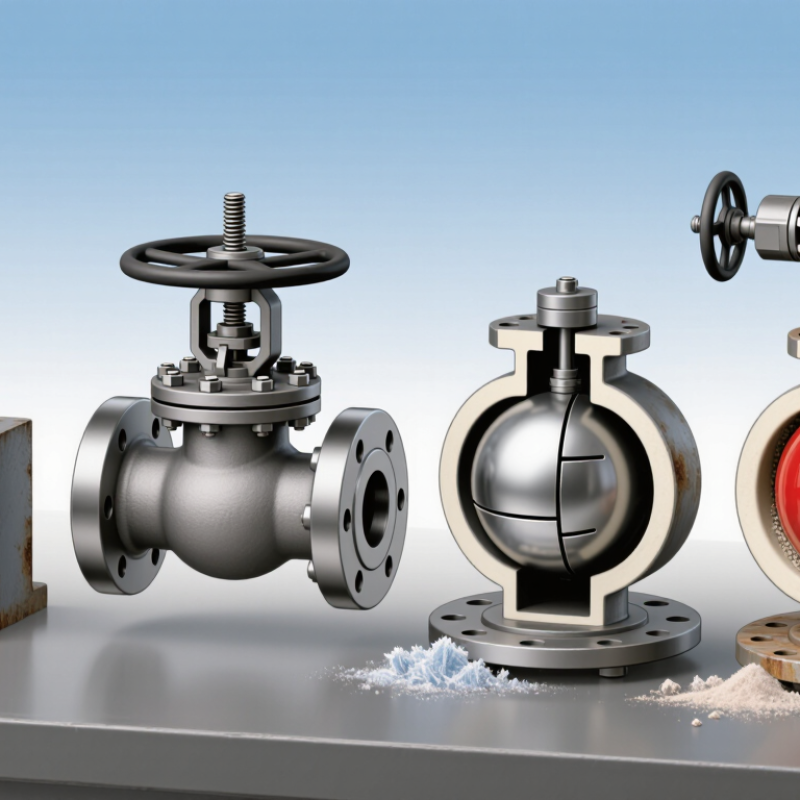
2026 Top Valve Ball Types Why Do They Stick After Inactivity?

Valve Ball Types Used in 2026 and Their Main Applications

In 2026, valve ball selection depends on pressure, temperature, media, and maintenance access. Floating ball valves suit low and medium-pressure water, air, and general process lines. Their ball moves slightly against the downstream seat. This creates reliable shutoff with a relatively simple structure.

Trunnion-mounted ball valves handle larger sizes and higher pressures. Their supported ball reduces operating torque. They are common in transmission pipelines, storage facilities, and demanding process systems.

Top-entry designs allow internal inspection without removing the valve body. Metal-seated balls serve hot, abrasive, or particle-filled media. Soft-seated and lined balls usually provide tighter sealing for clean fluids, gases, and corrosive chemicals.

Applications matter more than appearance. A valve exposed to muddy fluid needs different protection from one carrying dry gas. After months of inactivity, deposits can harden around the ball and seat. Corrosion may increase contact friction. Temperature changes can also compress or damage soft seat materials. Maintenance records often reveal a simple problem: the valve was operated too rarely. Small movement helps, but random cycling is not enough. The correct interval depends on service conditions and safety procedures. Inspectors should verify torque, leakage, actuator alignment, and seat condition before forcing the handle. Excessive force can score the ball or distort the stem. That mistake is easy to make. Yet, not every sticking valve needs replacement. Careful cleaning, compatible lubrication, and controlled testing may restore operation, although the result should be documented and reviewed.

How Valve Balls Operate Inside Different Valve Designs

2026 Top Valve Ball Types: Why Do They Stick After Inactivity?

A ball valve controls flow by rotating a drilled ball through 90 degrees. In a floating-ball design, line pressure pushes the ball against the downstream seat. This creates a tight seal, but it also increases friction. Trunnion-mounted balls use fixed upper and lower supports. Their seats move toward the ball with springs or line pressure. This design handles larger diameters and higher loads more steadily. Full-port balls reduce pressure loss, while reduced-port designs save space and cost. Top-entry valves permit internal access without removing the complete body. Side-entry valves often simplify production and installation.

Inactivity changes the contact surfaces. Residual water can create corrosion marks. Process chemicals may dry into hard deposits. Elastomer seats can compress and lose recovery. The U.S. Department of Energy reports that industrial compressed-air leaks may waste 20–30% of system output. Poorly maintained valve sealing can worsen that waste. API 6D and ISO 15848-1 provide recognized requirements for pipeline valve performance and fugitive-emission testing. Yet standards do not replace field judgment. A clean exterior proves very little.

Tips: Cycle critical valves periodically, following site procedures. Confirm the actuator torque before forcing movement. Never “shock” a stuck ball with excessive pressure. Check trapped cavity pressure, seat condition, and lubricant compatibility. Record the valve position and operating torque. Small records help reveal gradual sticking. This step is often neglected.

2026 Top Valve Ball Types: Why Do They Stick After Inactivity? — How Valve Balls Operate Inside Different Valve Designs
Valve Ball Type Typical Valve Design How the Ball Operates Ball Support and Loading Typical Sealing Arrangement Why Sticking Can Occur After Inactivity Relative Sticking Risk Practical Prevention
Full-Port Floating Ball Two-piece or three-piece floating-ball shutoff valve The ball is not permanently fixed to a lower trunnion. The stem rotates the ball, while line pressure pushes the ball toward the downstream seat to improve sealing. The stem carries the operating torque; the seats and body support the ball under differential pressure. Usually resilient polymer seats for clean liquid, gas, and general isolation service. Seat compression, dried process residue, corrosion products, polymer swelling, and contamination between the ball and seat can increase breakaway torque. Medium Keep the line clean, use compatible seat materials, exercise the valve periodically, and avoid leaving corrosive or solid-forming media trapped around the ball.
Reduced-Port Floating Ball Compact process, utility, and instrumentation isolation valve The stem turns a ball with a smaller flow passage than the connected pipe. The ball still moves laterally toward the downstream seat when pressure is applied. Floating ball with seat-supported reaction forces; torque rises when pressure, contamination, or seat friction increases. Resilient seats are common; some designs use fire-safe secondary metal sealing features. The smaller passage can retain more deposits relative to its opening area. Long-term seat deformation and trapped solids may prevent the ball from moving freely. Medium Flush the valve where permitted, control particulate contamination, verify actuator torque margin, and cycle the valve under safe operating conditions.
Trunnion-Mounted Ball Large-bore or high-pressure quarter-turn pipeline and process valve The ball is supported by upper and lower trunnions. The stem rotates the ball while the trunnions absorb most of the pressure-related reaction load. Fixed mechanical support reduces seat loading and operating torque compared with a floating ball, especially at larger sizes and higher pressures. Often uses spring-energized seats; designs may be soft-seated or metal-seated depending on temperature, pressure, and media requirements. Seat springs can lose effective movement because of corrosion or deposits. Trunnion bearings, stem interfaces, and cavity deposits can also create high breakaway torque. Medium Maintain clean lubricant or bearing conditions where specified, monitor cavity pressure, use suitable corrosion control, and test the complete actuator-valve assembly.
Metal-Seated Ball High-temperature, abrasive, erosive, or severe-service ball valve A precisely finished ball rotates against metallic seats. The seating surfaces provide isolation without relying primarily on a soft polymer contact layer. Ball and seats are supported by the body, seat retainers, springs, and sometimes trunnions; alignment is critical. Metal-to-metal contact, commonly with engineered hard-facing or wear-resistant surface treatment. Fine particles, scale, oxidation, thermal expansion, galling, and loss of surface finish can increase friction or mechanically lock the ball. High in dirty or corrosive service Use suitable flushing, filtration, compatible materials, correct lubrication, controlled cycling, and inspection of seating surfaces during maintenance.
V-Port or Characterized Ball Modulating control ball valve A V-shaped or profiled opening changes the effective flow area progressively as the ball rotates, allowing throttling rather than only open-close isolation. Usually stem-supported or trunnion-supported; the smaller initial opening can create high local velocity and high dynamic forces. Frequently uses a reinforced seat or metal seat suited to throttling duty; exact construction depends on pressure, temperature, and fluid properties. Partially open positions expose the edge and seat to erosion, solids deposition, flashing, cavitation, and process buildup. These effects can make the first movement after shutdown difficult. High in throttling duty Do not use an isolation valve as a control valve unless rated for it; select correct trim, limit cavitation, keep solids controlled, and exercise through the intended travel range.
Three-Way L-Port Ball Three-way diverting or selecting valve An L-shaped passage connects one inlet to one of two outlets, or connects selected ports according to the ball orientation. The stem normally rotates through 90 degrees. The ball is supported by the stem and seats; torque depends strongly on port pressure balance and seat design. Multiple seats or a combination of seats and body seals; port isolation depends on the internal flow-path arrangement. More sealing interfaces create additional areas for residue, crystallized chemicals, or corrosion products. Incorrect pressure equalization can also raise operating torque. Medium to High Confirm the permitted switching sequence, equalize pressure when required, flush dead-leg areas, and avoid leaving incompatible fluids trapped in unused ports.
Three-Way T-Port Ball Three-way mixing, diverting, or isolation valve A T-shaped passage can connect several ports depending on the rotation angle. Some arrangements permit mixing or simultaneous flow paths. Stem or trunnion support carries the ball; torque is affected by the number of active seats and by pressure acting on multiple passages. Multi-seat configuration with resilient or metal seating, selected for the required mixing and isolation function. Dead zones may retain deposits, while multiple seats can experience uneven compression. Thermal cycling and trapped pressure may increase the breakaway load. High with deposits or trapped pressure Define the allowable port positions, relieve trapped pressure safely, maintain temperature control, flush inactive branches, and verify travel-stop settings.
Cavity-Filled or Solid-Ball Construction Ball valves selected for weight reduction, drainage, or specialized process requirements The ball rotates around the stem axis; the internal ball structure may be hollow, cavity-filled, or solid depending on pressure and design requirements. Support may be floating or trunnion-mounted. Structural stiffness and cavity pressure behavior are design-dependent. Soft or metal seats with body seals; cavity relief features may be incorporated for pressure management. Fluid trapped in an internal cavity can expand with temperature. External contamination, seat distortion, or cavity pressure can prevent normal rotation or seating. Medium Use the specified cavity-relief direction, manage temperature changes, prevent contamination, and confirm that pressure trapped in the body cavity is safely controlled.
Cryogenic Ball Low-temperature isolation valve for liquefied gases and cryogenic systems The ball rotates between seats while the extended stem or bonnet helps keep the actuator and stem seals away from the coldest region. Floating or trunnion-supported designs are used; thermal contraction and differential contraction are central design considerations. Special low-temperature polymer, composite, or metal seating systems selected for thermal contraction and leakage control. Moisture can freeze around the stem or external parts. Thermal contraction, ice formation, seat shrinkage, and trapped liquid expansion can restrict movement. High if moisture or trapped liquid is present Keep external surfaces dry, use proper purge and insulation practices, prevent liquid lock, and follow the specified warm-up and cooldown procedures.
Top-Entry Ball Maintainable process or pipeline ball valve with removable top cover The ball rotates on a stem inside the body and can be accessed from the top for inspection or repair without removing the entire body from the line. May use floating or trunnion-mounted support; the body and top-entry components must preserve alignment after maintenance. Soft or metal seats, body seals, and stem seals selected for the operating conditions. Misalignment after maintenance, damaged body seals, deposits in the cavity, or corrosion around the stem and trunnion areas can cause sticking after storage. Medium Follow assembly tolerances, inspect alignment and seat condition, protect exposed internals during storage, and perform a documented functional test before service.
Engineering note: A valve that sticks after inactivity usually has increased breakaway torque caused by seat compression, deposits, corrosion, galling, frozen moisture, trapped pressure, thermal contraction, or actuator degradation. The actual risk depends on valve size, pressure differential, temperature, cycle frequency, fluid cleanliness, seat material, installation orientation, and maintenance practices.

Why Valve Balls Stick After Long Periods of Inactivity

Valve balls can stick after long periods of inactivity for several different reasons. The most common cause is residue between the ball and seat. Dust, dried process fluid, wax, or crystallized chemicals can harden during storage. It can feel welded.

Corrosion may develop when moisture enters through vents, seals, or damaged coatings. Even light surface corrosion can increase friction inside a tight valve. Soft-seated valve balls may also experience elastomer compression. Over time, the seat loses flexibility and grips the ball more firmly. Metal-seated balls are less affected by rubber deformation, but they can suffer from rust, scoring, or fine particles.

Temperature changes create another problem. A valve stored in a cold warehouse may later face heat, causing the ball, stem, and seat to expand at different rates. Trunnion-mounted designs can resist high pressure well, yet their bearings may stiffen when lubricant dries. Floating ball valves can stick when pressure pushes the ball tightly against a contaminated seat.

Maintenance records should show the valve’s last movement, storage conditions, and fluid exposure. A trained technician should inspect the stem, seat, and ball before applying force. Excessive torque can damage the stem or distort the seat. That mistake is easy to make. Gentle cycling, approved cleaning, and suitable lubrication often restore movement, but not always. In some cases, replacement is safer than repeated operation. The overlooked detail is simple: inactivity does not preserve a valve. It changes the conditions around every moving surface.

Material, Fluid, and Environment Factors Behind Ball Sticking

Ball valves can stick after weeks of inactivity, even when they worked smoothly during commissioning. Residual fluid may dry inside the cavity, leaving deposits on the ball and seats. Fine particles can settle around the stem or seat edges. Material compatibility also matters. Stainless steel, coated balls, and polymer seats respond differently to heat, chemicals, and pressure. A slightly swollen seat can increase breakaway torque. Small changes matter.

Fluid chemistry often starts the problem. Water with dissolved minerals may leave hard scale. Oils can oxidize into varnish-like films. Process fluids containing solids may compact near sealing surfaces. Low temperatures can stiffen elastomeric seats, while high temperatures can accelerate aging. Operators sometimes apply more force, but that may damage the stem or actuator. Do not force it blindly. Verify isolation, pressure status, and torque limits before inspection.

The environment adds another layer. Humid air can promote corrosion on exposed components, especially near coastal or chemical-processing areas. Dust, salt, and temperature cycling can enter poorly protected assemblies. A practical inspection records fluid type, valve material, storage time, temperature, and operating position. This evidence helps separate deposits from mechanical damage. Field experience suggests storage position is often overlooked. Still, it is not always the main cause. Regular cycling, compatible materials, clean flushing, and suitable protection reduce sticking. No maintenance plan prevents every failure.

2026 Top Valve Ball Types: Why Do They Stick After Inactivity?

Material, fluid, and environmental conditions can increase ball-valve sticking after long periods without operation. The chart presents a normalized engineering screening index from 0 to 100, based on common mechanisms including corrosion, deposit formation, lubricant aging, swelling, abrasion, and thermal cycling.

Carbon steel and abrasive slurry conditions show higher sticking potential because corrosion products and solid deposits can increase breakaway torque. PTFE and PEEK generally provide lower friction and better resistance to many deposits, while high humidity, thermal cycling, and high-viscosity fluids can increase the risk across valve types. Actual performance depends on valve design, clearances, pressure, temperature, and maintenance history.

Step-by-Step Methods to Prevent and Resolve Sticking Problems

Ball valves may stick after inactivity because their sealing surfaces lose lubrication, collect dust, or develop hardened process deposits. Floating and trunnion-mounted ball valves can both suffer, although their loading patterns differ. Humidity may also create corrosion around the stem or seat area. I have seen valves that looked clean outside but resisted movement internally.

Start by confirming the valve position and process conditions. Isolate the line, release pressure, and verify zero energy before inspection. Move the handle gently within its designed range. Do not use a pipe extension. Record the starting torque if a calibrated tool is available.

If the stem moves unevenly, stop and inspect the actuator, stem, and mounting bolts. Remove deposits with an approved cleaner, then check seat materials and lubricant compatibility. Replace damaged seals instead of forcing the ball through resistance. Reassemble carefully, then cycle the valve several times under controlled conditions. Test for leakage and abnormal torque.

Tips: Keep valves in a clean, dry environment. Cycle inactive valves periodically. Apply only compatible lubricant, and use a thin film. Too much grease attracts grit. Protect exposed stems from moisture. A perfect maintenance schedule is rarely practical, so adjust inspection intervals after reviewing actual torque and deposit patterns. Small details matter.

FAQS

How does a ball valve control flow?

A drilled ball rotates 90 degrees inside the valve. The opening aligns with the pipeline to permit flow. A solid side blocks it. Simple movement, demanding sealing.

How do floating and supported ball designs differ?

A floating ball moves slightly under line pressure. Pressure pushes it against the downstream seat, creating a tight seal. Friction can increase. Supported balls use fixed upper and lower supports. Their seats move toward the ball with springs or pressure.

What are full-port and reduced-port designs?

Full-port valves have openings close to the pipeline diameter. They usually create less pressure loss. Reduced-port valves use smaller openings. They may save space and cost. The trade-off matters.

Why can a valve ball stick after storage?

Dust, dried fluid, wax, and crystallized chemicals can harden between the ball and seat. The surfaces may feel welded together. Moisture can create corrosion marks. A clean outside proves little.

How do seats and temperature changes contribute to sticking?

Soft seats may remain compressed during long storage. They can lose flexibility and grip the ball tightly. Temperature changes may expand the ball, stem, and seat differently. Small differences matter.

What should an operator check before moving a stuck valve?

Confirm the valve position and process conditions. Isolate the line completely. Release trapped pressure and verify zero energy. Check the actuator, stem, mounting bolts, seat, and ball. Do not guess.

Can excessive force damage a stuck valve?

Yes. Excessive torque can bend the stem or distort the seat. Never use a pipe extension or sudden impact. Move the handle gently within its designed range. Stop if movement feels uneven.

How can sticking problems be prevented?

Store valves in a clean, dry environment. Cycle inactive valves according to site procedures. Protect exposed stems from moisture. Use a thin film of compatible lubricant. Too much grease attracts grit. Record movement dates, torque, storage conditions, and fluid exposure.

Conclusion

In 2026, valve balls are available in several designs, including floating balls, trunnion-mounted balls, V-port balls, and multi-port configurations. Each type supports different applications, from water and utility systems to chemical processing, energy equipment, and high-pressure flow control. Inside a valve, the ball rotates to align a passage with the pipeline or turn it away to stop flow. Its performance depends on accurate alignment, suitable seals, and controlled operating torque.

A common maintenance question is: why do valve balls stick after long periods of inactivity? The main causes include corrosion, hardened deposits, sediment buildup, seal deformation, pressure imbalance, unsuitable materials, temperature changes, and fluid contamination. Preventive measures include selecting compatible ball and seal materials, keeping the system clean and dry when appropriate, exercising the valve periodically, and checking operating conditions. If sticking occurs, isolate and safely depressurize the equipment, inspect the ball and seats, remove deposits with approved methods, lubricate when compatible, and replace damaged components before returning the valve to service.

Mason

Mason

Mason is a seasoned marketing professional with a deep expertise in the company's offerings and a passion for driving brand awareness. With a strong background in digital marketing strategies, he has an innate ability to connect with diverse audiences and effectively communicate product benefits.......