When discussing valve design, a key question arises: what is the difference between floating and trunnion valve balls? These two types of ball valves play crucial roles in fluid control. Understanding their distinctions is essential for engineers and technicians alike. Floating ball valves rely on the ball's buoyancy to create a seal. This design is simple yet effective for low-pressure applications.
Trunnion ball valves, however, incorporate a fixed trunnion support. This feature allows for higher pressure handling and reduces wear and tear. The trunnion design offers advantages in terms of stability and longevity. However, it may also complicate maintenance due to its intricate assembly.
Each valve type serves specific needs in various industries. Choosing the right valve can enhance system performance. Therefore, it is important to grasp the technical differences between them. This knowledge can prevent costly mistakes in valve selection and implementation. Understanding these nuances highlights the importance of proper valve application. As we explore further, the implications of choosing either valve type will become clearer.
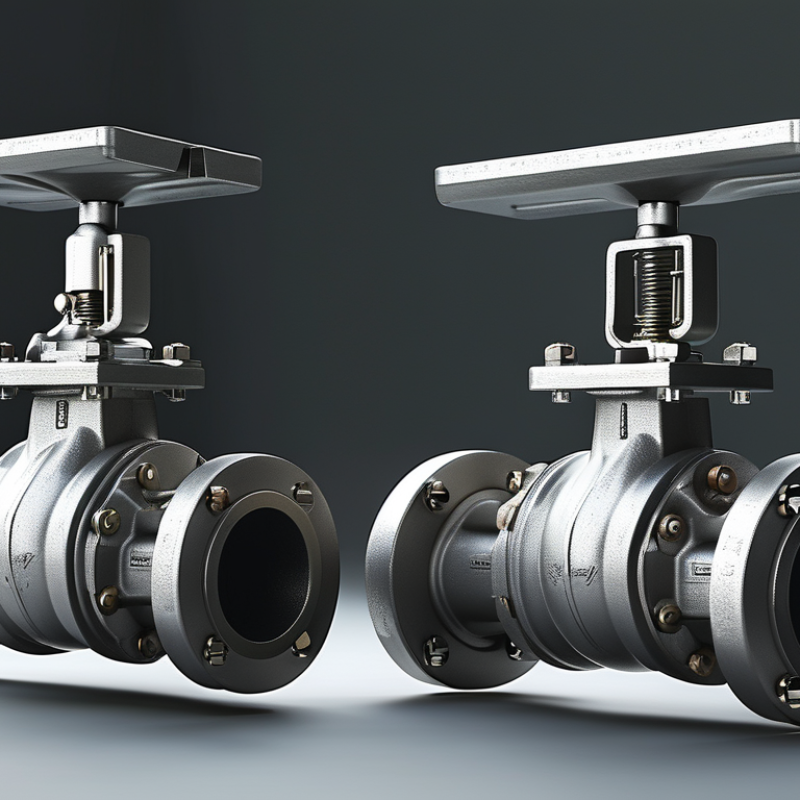
Overview of Valve Ball Types
Valve balls are vital components in various industries, influencing flow control significantly. Floating and trunnion valve balls serve specific purposes, impacting efficiency and reliability. Floating balls rely on pressure to seal against the seat, while trunnion balls are mounted on a stem, providing enhanced stability.
In the oil and gas sector, it’s reported that about 70% of valve failures stem from improper ball selection and installation. Floating balls suit applications with lower pressure, generally below 1500 psi. In contrast, trunnion balls excel in high-pressure environments, often exceeding 5000 psi. Their design allows for better load handling, minimizing wear over time.
Moreover, the choice between these two types greatly affects maintenance schedules. Floating valve balls may require more frequent checks due to wear patterns. Trunnion valves, being more robust, typically demand less routine intervention, translating to cost savings. Understanding the differences can lead to improved system reliability and operational efficiency.
Characteristics of Floating Valve Balls
When discussing the characteristics of floating valve balls, it’s essential to understand their unique design. Floating valve balls are free to move within the valve housing. This design allows the ball to seat itself tightly against the valve body. The pressure in the pipeline helps to achieve this seal. This feature enhances the ball's effectiveness in controlling flow.
The material used for floating valve balls is often vital. They can be made from various materials, including stainless steel and polymer composites. Each material has advantages and applications in different industries. The floating design also makes them more forgiving in alignment. They can adjust as pressure changes, ensuring a reliable seal under fluctuating conditions.
However, improper sizing can lead to issues. It’s crucial to calculate the correct dimensions for optimal performance. Floating valve balls may seem simple, but they require precision engineering. Understanding their characteristics can lead to better applications in real-world situations. This knowledge aids in selecting the right valve for specific tasks.
Users must pay attention to the details during installation. Neglecting these aspects can impact performance and durability. Each choice in valve design carries significance, influencing efficiency and reliability in operation.
Characteristics of Trunnion Valve Balls
Trunnion valve balls are a specialized type of ball used in valve designs. Unlike floating balls, trunnion balls are fixed at both the top and bottom. This design allows for more stability, especially under high-pressure conditions. One noticeable characteristic is their ability to handle larger flow rates. They provide greater control over fluid dynamics, ensuring efficient operation.
The structure of trunnion balls includes a central rotating shaft. This feature enhances durability and minimizes wear over time. Materials used for trunnion balls often include stainless steel, which offers excellent resistance to corrosion. However, not all trunnion balls perform equally well. Some may fail under extreme conditions or during rapid temperature changes.
Another aspect to consider is maintenance. Trunnion valve balls generally require less frequent maintenance compared to floating types. However, when issues arise, repairs can be complex. This complexity can lead to downtime in critical systems. Understanding these characteristics can help in selecting the right type of valve for specific applications. Choosing incorrectly can lead to costly consequences.
Comparative Analysis of Performance
When comparing floating and trunnion valve balls, performance characteristics play a crucial role. Floating valve balls are designed to move freely within the valve body. This allows for greater flexibility and better sealing under certain conditions. They are often lighter, making them easier to operate. However, in high-pressure environments, they might not seal as effectively.
Trunnion valve balls, on the other hand, are fixed in place. This design provides stability, especially in larger and heavier valves. They can withstand higher pressures without deforming. Their structure ensures consistent performance in demanding applications. Experience shows that in critical systems, the durability of trunnion balls often outweighs the advantages of floating balls.
**Tip:** When selecting a valve type, consider the application. Evaluate pressure, flow rates, and the nature of the media being transported.
Another aspect to consider is maintenance. Floating valves might require more frequent inspection due to wear. In contrast, trunnion valves can offer a longer lifespan due to their robust design. However, replacing a trunnion ball can pose challenges due to its fixed nature.
**Tip:** Always assess the long-term costs of maintenance against the initial investment in valve type. This approach can save money and time in the future.
What is the Difference Between Floating and Trunnion Valve Balls? - Comparative Analysis of Performance
| Feature |
Floating Valve Balls |
Trunnion Valve Balls |
| Design |
Free to float within the seats, relies on pressure for sealing |
Fixed position with a trunnion support, less dependent on pressure for sealing |
| Sealing Mechanism |
Seals based on compressed seats |
Seals through direct engagement with the ball |
| Operating Pressure |
Generally suited for lower pressure applications |
Handles higher pressures efficiently |
| Size Range |
Typically smaller sizes |
Available in larger sizes |
| Applications |
Water, oil, and gas services with moderate flow |
High-performance industrial applications, including mining and pipeline |
| Maintenance |
May require more frequent maintenance |
Reduced maintenance frequency due to sturdier design |
Applications and Use Cases for Each Type
Floating and trunnion valve balls serve different functions in various applications.
Floating balls are ideal for low-pressure systems.
They rely on the flow of the medium to push the ball against the valve seat.
This design makes them suitable for pipeline installations handling fluids like
water,
oil, or gas.
These valves offer quick sealing capabilities and are often used in
residential plumbing and
irrigation.
In contrast,
trunnion balls are engineered for higher pressure scenarios.
These are mounted on trunnions, allowing for reduced wear during operation.
As a result, trunnion valves excel in
large-scale industrial applications,
especially in oil and gas sectors.
Their design minimizes torque and enhances control, making them suitable for
throttling and regulation.
Trunnion ball valves are typically found in power plants and
chemical processing facilities.
Each valve type has unique characteristics that determine its suitability.
While floating valves offer flexibility in less demanding environments,
trunnion valves provide robustness under high stress.
Choosing between them requires careful consideration of
system demands and
operational pressures.
An optimal choice can improve
efficiency and
reliability in a project's specific context.
FAQS
: Valve balls control the flow in various industries. They are crucial for efficient operation.
Floating balls seal under pressure. Trunnion balls are mounted on a stem, offering better stability.
Floating balls are suitable for pressures below 1500 psi. Trunnion balls perform well above 5000 psi.
Floating balls may need frequent checks due to wear. Trunnion balls typically require less routine maintenance.
Floating valve balls are ideal for low-pressure systems. They provide quick sealing for various fluids.
Their fixed design ensures stability and consistent performance under high pressure, reducing wear over time.
Floating balls are often used in residential plumbing and irrigation systems. They handle fluids effectively.
Their fixed nature makes replacement more complicated compared to floating balls. This can be a consideration.
Evaluate the application's pressure, flow rates, and media nature. This ensures the right choice for efficiency.
Yes, the long-term maintenance costs can vary. Choosing wisely can lead to savings and improved reliability.
Conclusion
In exploring the question of "what is the difference between floating and trunnion valve balls," it is essential to understand the distinct characteristics and performance metrics of each type. Floating valve balls are designed to move freely within the valve body, enabling them to seal tightly against the valve seat when pressure is applied. This design is particularly effective in lower-pressure applications. In contrast, trunnion valve balls are fixed at the top and bottom, offering increased stability and making them suitable for high-pressure environments.
A comparative analysis reveals that while floating balls excel in applications requiring flexibility and responsiveness, trunnion balls are preferred in scenarios where precise control and minimal leakage are paramount. Each type serves specific use cases across various industries, highlighting the importance of selecting the right valve ball based on the operational requirements.
 RPZ Valve
