 RPZ Valve
What is the life expectancy of a chrome-plated valve ball? The honest answer depends on operating conditions, not calendar age. A ball used with clean water may remain serviceable for many years. Another exposed to abrasive slurry, corrosive chemicals, or frequent cycling may deteriorate much sooner. The chrome layer can show polishing, scratches, pitting, or edge wear before the valve appears to fail.
Reliability engineer John Moubray described reliability as “the ability of an item to perform a required function under stated conditions for a stated period of time.” That definition fits valve balls well. Service life should be estimated from actual pressure, temperature, fluid chemistry, cycle frequency, coating thickness, and seat compatibility. Installation quality matters too. Misalignment can create a narrow wear track, often visible around the ball’s sealing area.
A neat number would be convenient, but it can mislead. In practical maintenance work, inspection records provide stronger evidence than generic lifespan claims. Operators should compare torque changes, leakage, operating cycles, and surface condition. Small scratches can become serious leakage paths. Abrasive particles may act like sandpaper inside the valve.
The following discussion examines what is the life expectancy of a chrome-plated valve ball through material selection, operating severity, maintenance history, and failure signs. It also considers when replacement is safer than continued service. The estimate may remain imperfect. That is the uncomfortable part. Reliable decisions require measured evidence, qualified inspection, and manufacturer guidance for the specific valve design.
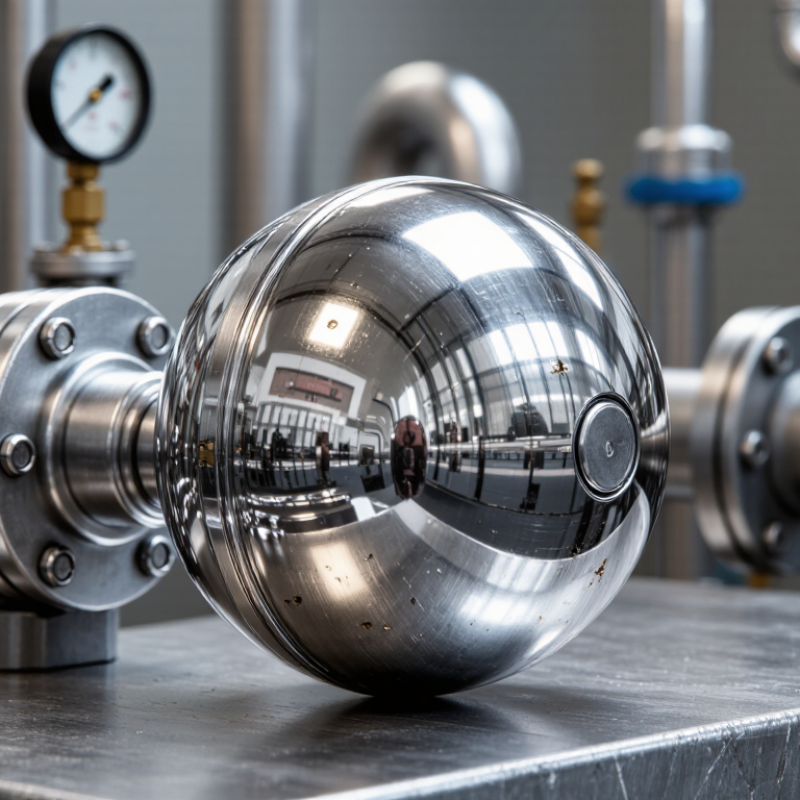
A chrome plated valve ball typically serves for 10–20 years or more than 100,000 operating cycles. These figures describe practical service expectations, not a guarantee. In clean water, air, or compatible oil systems, the hard chrome surface can resist wear, scoring, and repeated friction. A properly aligned ball also reduces uneven contact against the valve seat.
Real service life depends heavily on operating conditions. Abrasive particles can scratch the coating within months. High temperatures may weaken seal materials before the ball itself shows damage. Corrosive fluids, excessive pressure, frequent throttling, and poor installation can shorten the expected life. Small details matter. A gritty actuator feels rough. A damaged seat leaves a visible wear track.
In field maintenance, operators should record cycle counts, torque changes, leakage, and surface condition. Inspect the ball during scheduled shutdowns, especially after pressure spikes or process contamination. A smooth, reflective surface is encouraging, but it does not prove the coating remains fully intact. Coating thickness, adhesion, and substrate condition require proper inspection methods.
The “100,000+ cycles” estimate can be realistic in controlled service. It may be optimistic in demanding systems. Some valves exceed twenty years with light use, while others need repair much sooner. Service records are more reliable than a printed life estimate. Temperature, media cleanliness, and cycling frequency should guide the final replacement interval.
| Performance Dimension | Typical Value or Range | What It Means | Main Influencing Factors |
|---|---|---|---|
| Typical service life | 10–20 years | Common expected operating lifespan when the ball, seats, stem, and body are correctly selected and maintained. | Media chemistry, temperature, pressure, cycling frequency, installation quality, and seat condition. |
| Typical operating cycles | 100,000+ cycles | A practical reference point for properly engineered on/off service; actual cycle ratings vary by valve design. | Actuation torque, differential pressure, valve size, seat material, fluid cleanliness, and cycle speed. |
| Chrome plating thickness | Approximately 25–100 µm for many industrial applications | Provides a hard, wear-resistant surface; the specified thickness must match the service environment. | Required wear resistance, corrosion exposure, dimensional tolerances, and plating process control. |
| Surface hardness | Often about 800–1,000 HV after hard chrome plating | The hard surface helps resist abrasion, galling, and repeated sliding contact. | Coating process, substrate preparation, microcracking, finishing quality, and operating conditions. |
| Suitable operating temperature | Commonly −20°C to 200°C for many assemblies | The usable range is determined by the valve seats, seals, body materials, and process fluid—not the chrome layer alone. | Seat and seal material, thermal cycling, pressure rating, fluid properties, and manufacturer design limits. |
| Abrasion resistance | High for clean, low-to-moderate solids service | Chrome plating can reduce surface wear caused by sliding contact and fine particles. | Particle size, concentration, velocity, cavitation, differential pressure, and throttling operation. |
| Corrosion resistance | Good in compatible environments; not universally corrosion-proof | The coating can protect the substrate, but pores, scratches, and aggressive chemicals may allow corrosion to develop. | Chlorides, acids, caustics, moisture, coating integrity, underfilm corrosion, and galvanic conditions. |
| Leakage performance | Dependent primarily on seat condition and ball finish | A polished, undamaged ball supports tight shutoff, but plating alone does not guarantee zero leakage. | Seat wear, scratches, debris, alignment, thermal expansion, actuator adjustment, and pressure direction. |
| Inspection interval | Every 6–12 months, or according to operating severity | Routine checks can identify leakage, torque increases, coating damage, and actuator problems before major failure. | Criticality of service, cycle count, safety requirements, fluid hazard, and maintenance history. |
| Common replacement indicators | Persistent leakage, rising torque, visible scoring, pitting, or coating loss | These conditions may indicate that the ball, seats, seals, or related valve components need repair or replacement. | Erosion, corrosion, cavitation, dry running, contamination, misalignment, and excessive operating force. |
| Best-use profile | Clean fluids and on/off isolation service | Chrome plated balls are generally better suited to isolation than continuous throttling unless specifically engineered for control duty. | Fluid cleanliness, pressure drop, cavitation risk, required control accuracy, and valve construction. |
Note: The 10–20 year and 100,000+ cycle figures are typical planning values, not guaranteed ratings. Actual life should be confirmed against the complete valve assembly, applicable standards, process conditions, and maintenance records.
It may last 10–20 years or exceed 100,000 operating cycles. Actual life varies widely. Clean service usually supports longer performance.
No. It describes a practical expectation, not a promise. Abrasive particles, pressure spikes, and frequent throttling can shorten life. This estimate can be optimistic.
A hardness near 800–1,000 HV resists sliding wear and repeated seat contact. It helps preserve a smooth sealing path. Hardness alone cannot prevent every failure.
Sand, suspended particles, high fluid velocity, and cavitation may scratch or erode it. Corrosive fluids can create additional problems. Small scratches may grow during every cycle.
Yes. Heat may weaken seal materials before the ball shows visible damage. Check the seals, seat, and ball together. The ball is not always the first weak point.
Look for dull patches, grooves, peeling, or uneven contact marks. A visible wear track on the seat is important. A shiny surface helps, but proves little.
Record operating cycles, torque changes, leakage, and surface condition. Inspect the valve during scheduled shutdowns. Photos can reveal gradual changes.
Use operating records, inspection results, temperature, and fluid cleanliness. Replace it when wear, leakage, or coating damage affects sealing. Printed life estimates are only rough guides.
The question “what is the life expectancy of a chrome-plated valve ball” depends on design quality, coating condition, and operating environment. Under typical industrial service, a chrome-plated valve ball may remain functional for 10–20 years or more than 100,000 operating cycles. A chrome layer measuring approximately 25–100 μm can provide an important wear barrier, while surface hardness of around 800–1,000 HV helps resist abrasion, erosion, and repeated contact damage.
Actual service life is strongly influenced by pressure, temperature, fluid type, contamination, and cycling frequency. Aggressive media, excessive pressure, thermal changes, or poor alignment can accelerate coating loss and leakage. Routine inspection should measure coating thickness, surface damage, operating torque, and leakage performance. By comparing inspection results over time, operators can estimate coating wear, identify declining performance, and determine the remaining service life before maintenance or replacement becomes necessary.
