RPZ Valve
Selecting a coating for high-temperature valve balls is not a simple catalogue decision. The right surface must survive heat, pressure, abrasion, corrosion, and repeated movement. In service, a polished ball may face hot steam, chemical media, or dry particles within the same operating cycle.
So, what is the best coating for high-temperature valve balls? The honest answer depends on the valve design and working environment. HVOF-applied tungsten carbide can provide strong wear resistance and a dense surface. Ceramic coatings may perform well under severe heat and corrosive conditions. Nickel-based alloys can offer useful protection where chemical exposure and thermal cycling matter.
There is no universal winner.
Experienced valve engineers normally review the ball material, coating thickness, surface roughness, operating temperature, pressure, and sealing system. They also examine thermal expansion differences between the coating and substrate. A coating that performs well in a laboratory may crack after repeated heating and cooling. That detail is easy to overlook.
For Chinese coating suppliers, reliable evaluation should include process records, hardness testing, bond-strength checks, dimensional inspection, and simulated service testing. Independent reports are valuable, but they do not replace application-specific evidence. Ask for actual operating references, not only attractive technical figures.
This article compares common coating technologies used for high-temperature valve balls. It considers wear resistance, corrosion behavior, repairability, cost, and manufacturing consistency. Some recommendations may remain conditional. That is intentional. A careful selection is safer than a confident guess when valve failure can interrupt an entire process line.
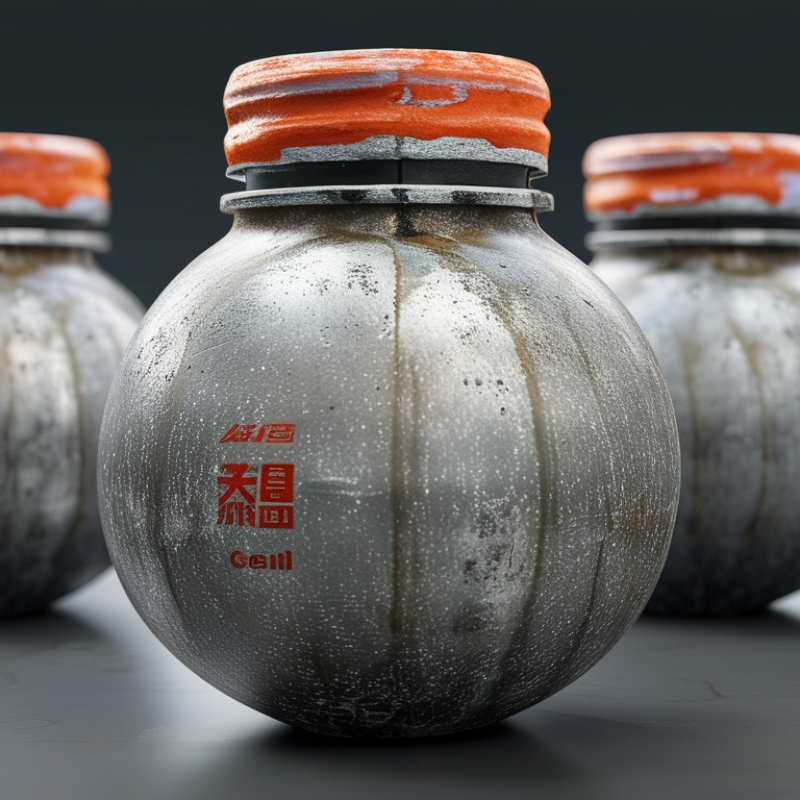
High-temperature valve balls need coatings that survive heat, pressure, friction, and corrosive media. The correct choice depends on operating conditions, not location alone.
In practical valve testing, engineers should review continuous temperature, peak temperature, pressure, fluid chemistry, and cycling frequency. Hard carbide coatings can resist erosion and sliding wear.
Ceramic-based layers may retain hardness at elevated temperatures, but they can become brittle under impact. Nickel-based systems often provide useful corrosion resistance, although their performance depends strongly on surface preparation and application quality.
Adhesion is critical. Poor bonding causes early flaking. The ball surface should be cleaned, roughened, and inspected before coating. Dimensional control is equally important, because a few microns can affect sealing torque and leakage.
Test samples should match the actual valve material and service fluid. Laboratory results alone may mislead. We have seen promising coatings perform poorly after thermal cycling. That failure is worth studying, not hiding.
A reliable supplier should provide thickness records, hardness data, adhesion results, and traceable inspection reports. Coating selection remains a balance between temperature resistance, wear life, corrosion protection, and repair practicality.
China Best Coating for High-Temperature Valve Balls?
Key Coating Types for High-Temperature Valve Balls
Selecting a coating for high-temperature valve balls requires more than comparing hardness values. Temperature, pressure, fluid chemistry, and cycling can change the result. In field evaluations, small clearance changes often caused more trouble than visible surface wear. Carbide coatings applied by high-velocity thermal spraying offer strong resistance to erosion and sliding contact. Tungsten carbide suits many abrasive services, while chromium carbide can perform better at elevated temperatures. The binder and spray process still matter greatly.
Ceramic coatings provide excellent hardness and chemical stability. However, they may crack under impact or repeated thermal expansion. They need a carefully prepared substrate and controlled coating thickness. Nickel-based coatings can resist oxidation and corrosion, especially where moderate wear is expected. They are not always the best choice for severe particle erosion. Hard chromium may appear attractive, but its performance can decline during prolonged high-temperature exposure.
Test the complete valve assembly, not only the coated ball. Check roundness, surface roughness, adhesion, and torque before and after thermal cycling. A coating can look flawless and still fail at the interface. I would avoid selecting a coating from temperature data alone. Real service includes start-ups, shutdowns, trapped particles, and uneven heating. Sometimes, the “strongest” coating performs poorly because its thermal expansion differs from the valve ball. Proper trials remain essential.
| Coating Type | Typical Composition | Indicative Continuous Service Temperature | Typical Hardness | Typical Applied Thickness | Main Advantages | Key Limitations | Typical Valve-Ball Applications | Overall Suitability |
|---|---|---|---|---|---|---|---|---|
| Chromium Carbide–Nickel-Chromium Thermal Spray | Chromium carbide particles in a nickel-chromium metallic matrix, commonly applied by high-velocity oxygen-fuel spraying. | Approximately 600–900 °C, depending on atmosphere, load, binder chemistry, and process quality. | Typically about 900–1,300 HV0.3. | Approximately 100–300 µm after finishing. | Strong resistance to high-temperature wear, sliding abrasion, erosion, and oxidation; generally more temperature-stable than tungsten-carbide coatings. | Requires accurate surface preparation and finishing; carbide oxidation and thermal cycling can reduce performance outside the recommended range. | High-temperature steam, hot gas, refinery, petrochemical, and power-generation valve balls. | Excellent for high-temperature wear |
| Tungsten Carbide–Cobalt-Chromium Thermal Spray | Tungsten carbide particles in a cobalt-chromium binder, normally deposited by high-velocity oxygen-fuel or high-velocity air-fuel spraying. | Approximately 350–600 °C for long-term service; short-term exposure can be higher depending on the system. | Typically about 1,000–1,600 HV0.3. | Approximately 75–250 µm after grinding or polishing. | Very high hardness, low porosity, excellent resistance to sliding wear, particle erosion, and galling. | Long-term exposure to higher temperatures can oxidize the carbide phase and affect the binder; not usually the first choice for continuous service near 800–900 °C. | High-cycle control valves, abrasive slurry service, oil and gas valves, and moderately high-temperature applications. | Excellent below its temperature limit |
| Chromium Oxide Ceramic | Dense chromium oxide ceramic applied by plasma spraying or other controlled thermal-spray processes. | Approximately 500–800 °C in wear service; the practical limit depends strongly on thermal shock and sealing conditions. | Typically about 1,000–1,500 HV0.3. | Approximately 50–250 µm after finishing. | High hardness, low friction, good resistance to abrasive wear, and good chemical stability in many hot environments. | Ceramic layers can be brittle; edge impact, rapid thermal cycling, misalignment, and excessive contact stress may cause cracking or spallation. | Precision valve balls, dry or low-lubrication service, hot corrosive gases, and applications requiring low friction. | Very good with controlled loading |
| Alumina Ceramic | Aluminum oxide ceramic, usually applied as a plasma-sprayed coating. | Approximately 700–1,000 °C for many wear applications, subject to thermal-shock limitations. | Typically about 700–1,200 HV0.3. | Approximately 100–500 µm after finishing. | Excellent oxidation resistance, electrical insulation, chemical stability, and high-temperature capability. | Lower fracture toughness than metallic coatings; sensitive to impact, sharp geometry, tensile stresses, and differential thermal expansion. | Hot gas valves, electrically insulating valve components, and applications with limited impact or vibration. | Good for stable thermal conditions |
| PVD Chromium Nitride | Hard chromium nitride thin film deposited by physical vapor deposition. | Approximately 500–700 °C, depending on coating architecture, substrate, atmosphere, and duty cycle. | Typically about 1,500–2,500 HV0.05. | Approximately 2–10 µm. | Very low coating thickness, smooth surface, high hardness, low friction, and good resistance to adhesive wear and corrosion. | Limited thickness means it cannot compensate for major dimensional loss; high contact stress, rough counterfaces, or severe erosion may shorten service life. | Precision-finished valve balls where tight tolerances, low friction, and moderate-to-high temperature performance are required. | Good for precision applications |
| Nickel-Based Self-Fluxing Alloy | Nickel-based alloy containing hard boride, carbide, or silicide phases; commonly applied by thermal spray followed by fusion or laser cladding. | Approximately 600–900 °C, depending on alloy composition and the surrounding atmosphere. | Typically about 500–800 HV0.3. | Approximately 300–1,000 µm after finishing. | Metallurgically bonded layer, good resistance to corrosion, erosion, cavitation, and moderate high-temperature wear. | Fusion processing introduces heat into the valve ball and may cause distortion; hardness is generally lower than carbide coatings. | Severe-service valve balls requiring a relatively thick, repairable, and metallurgically bonded protective layer. | Very good for thick protective layers |
| Cobalt-Based Hardfacing Alloy | Cobalt-chromium alloy with tungsten, carbon, and other alloying elements; deposited by laser cladding, PTA, or welding-based processes. | Approximately 600–900 °C, with some grades retaining useful wear resistance at higher temperatures. | Typically about 350–600 HV0.3. | Approximately 500–2,000 µm after finishing. | Excellent hot hardness, resistance to galling, erosion, corrosion, and metal-to-metal sliding wear. | Higher material and processing cost; cobalt alloys may be unsuitable where cobalt restrictions, galvanic compatibility, or specific chemical-media requirements apply. | Hot steam, combustion-gas, high-pressure, and severe metal-seating valve-ball service. | Excellent for severe hot sliding wear |
| Electroless Nickel-Phosphorus | Chemically deposited nickel alloy containing phosphorus; heat treatment can increase hardness. | Generally up to 250–350 °C for long-term service, depending on phosphorus level and heat treatment. | Approximately 450–1,000 HV0.1 after suitable heat treatment. | Approximately 10–100 µm. | Uniform coverage, good corrosion resistance, smooth finish, and useful dimensional control on complex valve-ball surfaces. | Usually unsuitable for continuous very-high-temperature service; prolonged heating can alter hardness and coating properties. | Moderate-temperature valve balls requiring uniform corrosion protection and tight dimensional tolerances. | Not recommended for extreme heat |
China Best Coating for High Temperature Valve Balls?
Material Selection for Valve Ball and Coating Compatibility
Selecting a high-temperature valve ball starts with the base material, not the coating. Stainless steel may suit moderate heat, while nickel-based alloys resist thermal cycling and aggressive process media. The ball and seat must also share compatible thermal expansion behavior. Otherwise, clearance changes can cause leakage or seizure.
Coating selection depends on temperature, pressure, sliding speed, and chemical exposure. Tungsten carbide coatings can provide strong wear resistance in demanding services. However, binder oxidation may limit their use at higher temperatures. Chromium carbide with a nickel-chromium matrix can perform better in some hot, oxidizing environments. Ceramic coatings tolerate heat well, but their brittleness requires careful control of impact and surface finish.
Small details matter. A rough coating can damage the seat. A thin coating may wear through quickly. A thick coating can distort ball roundness. Engineers should check coating adhesion, porosity, hardness, and dimensional tolerance after spraying and finishing. Thermal cycling tests are valuable because laboratory hardness alone proves very little. A coating may look perfect on a test coupon and still crack on a working valve ball. That uncomfortable possibility deserves attention. Selection should follow actual media data and operating history, not only a supplier’s standard table.
Material Selection for Valve Ball and Coating Compatibility
The chart compares typical maximum continuous service temperatures for commonly used coating systems on valve balls. Chromium-carbide and ceramic coatings generally provide the highest temperature capability, while tungsten-carbide coatings are often selected when high sliding-wear resistance is more important than extreme-temperature exposure. Actual performance depends on substrate material, coating thickness, thermal expansion, atmosphere, pressure, and cycling conditions.
China Best Coating for High Temperature Valve Balls?
Coating Application Process for High-Temperature Valve Balls
Choosing the best coating starts with service conditions, not the supplier’s location. Temperature, pressure, fluid chemistry, sliding speed, and particle content all matter. For many high-temperature valve balls, carbide-based coatings offer strong wear resistance. Ceramic or nickel-based systems may suit different heat and corrosion requirements. The correct choice must follow material testing and operating data.
The application process begins with dimensional inspection and surface cleaning. Oil, rust, and residue must be removed completely. Sensitive areas are masked before abrasive blasting. Controlled roughening creates an anchor profile for the coating. The ball is then preheated within a monitored range. Excessive heat can distort the substrate. Too little heat may reduce bonding.
Thermal spraying is applied in carefully controlled passes. Common methods include high-velocity oxygen fuel and plasma spraying. Operators monitor spray distance, powder feed, gas flow, and surface temperature. Coating thickness should match the valve design. Too much material can cause sealing problems. After spraying, the ball is ground and polished to the required roundness and roughness. Final checks may include bond testing, hardness measurement, visual inspection, and dimensional verification. No coating is perfect. In practice, small process variations still deserve review, especially near edges, holes, and masked zones.
Performance testing matters more than a coating name in China manufacturing. For high-temperature valve balls, engineers commonly compare HVOF tungsten-carbide coatings, chromium carbide systems, and ceramic layers. The correct choice depends on temperature, pressure, particles, and fluid chemistry.
Test the complete ball, not only a flat coupon. Measure coating thickness, porosity, hardness, adhesion, and surface roughness after spraying and grinding. ASTM C633 provides a recognized adhesion test method, while ASTM E376 supports coating-thickness measurement. For sealing surfaces, many projects specify an Ra value near 0.2 micrometres, but this is not a universal requirement. It must match the seat design.
Temperature cycling exposes weak preparation. A practical qualification program may include 100 to 300 cycles between ambient temperature and the service temperature, followed by torque and leakage testing. ISO 15848-1 classifies fugitive-emission performance, while API 6D addresses pipeline-valve testing requirements. Test reports should record leakage, cycle count, coating loss, and visible cracking. Independent laboratory verification adds credibility.
Quality control should include substrate hardness checks, blasted-surface inspection, calibrated spray parameters, and full dimensional inspection after finishing. China factories can provide strong process control, but paperwork alone proves little. One uncomfortable truth remains: a coating that passes a coupon test may fail on a sharp ball edge. Manufacturing teams should review failed samples openly, because small grinding errors can create large leakage risks.
Choose based on temperature, pressure, fluid chemistry, particles, and thermal cycling. Location alone is not enough. Conditions decide performance.
Carbide coatings resist erosion and sliding wear. Ceramic layers retain hardness and chemical stability. Nickel-based coatings support corrosion resistance under moderate wear.
Ceramic layers may crack under impact or repeated heating and cooling. Their hardness is useful, but brittleness remains a concern.
Tungsten carbide often suits abrasive fluids. Chromium carbide may perform better at higher temperatures. The binder and spraying process still matter.
Clean and roughen the surface before coating. Inspect blasting quality and substrate hardness. Poor preparation can cause early flaking.
A few microns can change sealing torque and leakage. Grinding errors near a ball edge may create serious sealing problems. Small details matter.
Check roundness, roughness, adhesion, thickness, hardness, torque, and leakage. Perform tests before and after thermal cycling. Test the complete assembly.
A practical program may use 100 to 300 cycles between ambient and service temperatures. Record cracking, coating loss, torque, and leakage.
Not completely. A flat sample may pass while a coated ball fails at an edge. Real geometry matters more than expected.
Request thickness records, hardness data, adhesion results, dimensional reports, and traceable inspections. Paperwork helps, but it proves little alone. Failed samples deserve review.
Selecting the right coating for a high-temperature valve ball requires balancing heat resistance, wear protection, corrosion resistance, and compatibility with the base material. So, what is the best coating for high-temperature valve balls? The answer depends on operating temperature, pressure, fluid conditions, friction, and the valve ball’s substrate. Common options include ceramic-based coatings, carbide coatings, and nickel-based alloy coatings, each offering different advantages for thermal stability, hardness, and chemical resistance.
A reliable selection process should evaluate coating adhesion, thermal expansion, surface finish, and dimensional accuracy. Proper preparation may include cleaning, blasting, controlled spraying or deposition, heat treatment, and precision grinding. In China manufacturing, quality control should cover coating thickness, hardness, porosity, bond strength, roundness, and high-temperature wear performance. Testing under simulated operating conditions helps confirm that the finished valve ball can maintain sealing performance and service reliability over extended use.
